Medan
Well the rains have really caught up with us! We knew the last few weeks in Asia were a risk and they haven’t disappointed. The rainy season is well and truly underway.

But as good English men we both packed an umbrella!
We landed in the northern city of Medan. The city was an odd mix of modern and historic buildings and almost had that decadent feel of decay, a bit like Havana.
So armed with brollies we headed out to have a look.
First stop was Tjong A Fie Manson
Called “a historical jewel in Medan”, the 35-room, 2-storey Tjong A Fie Mansion was built in 1895 on an area of 8000 sq. meter. It is a registered historical landmark as well as a cultural heritage building and museum.
The Mansion has Chinese, Malay and Art Deco influences in its architecture style. The structure was built observing feng-shui principles. The rooms are on four sides of the structures and surround a big open-air courtyard in the middle, signifying the “Well of Heaven”.
https://tjongafiemansion.org/#intro-1
Every inch of the home was covered with decoration or carvings and lots of personal effects from the family’s history. It’s located right in the heart of the city, but looking at historical images it looked like it would have originally been an upmarket residential neighbourhood before the city engulfed it.


Next stop was the Istana Maimun:
Maimoon Palace or Maimun Palace is an istana of the Sultanate of Deli and a well-known landmark in Medan, the capital city of Northern Sumatra, Indonesia. Today, it serves as a museum. The name is the Arabic word for “blessing”. Built by Sultan Ma’mun Al Rashid Perkasa Alamyah in the years 1887–1891, the palace was designed by the Dutch architect Theodoor van Erp and covers 2,772 m² with a total of 30 rooms
Again the whole building was architecturally over the top with intricate design and carvings.


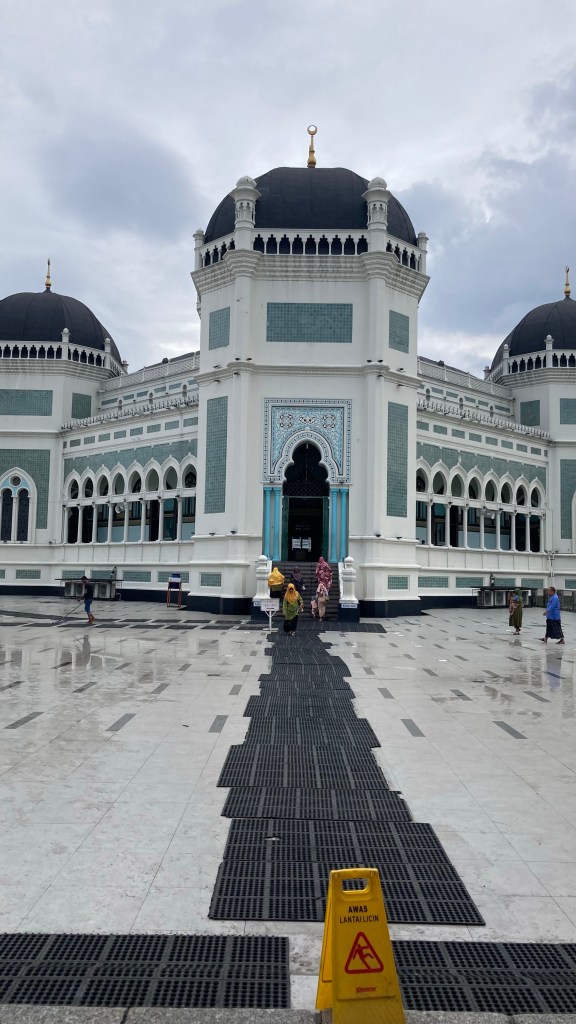
Last stop was the Masjid Raya Al-Mashun mosque. Richard was a little uncomfortable seeing this as a ‘tourist stop’ but I’m really glad we did go in. People were interested in speaking and asking where we were from, and what our religion was. The mosque is not that old and walking around the city there is a lot of construction being undertaken for new religious sites, as there has been generally in Indonesia.


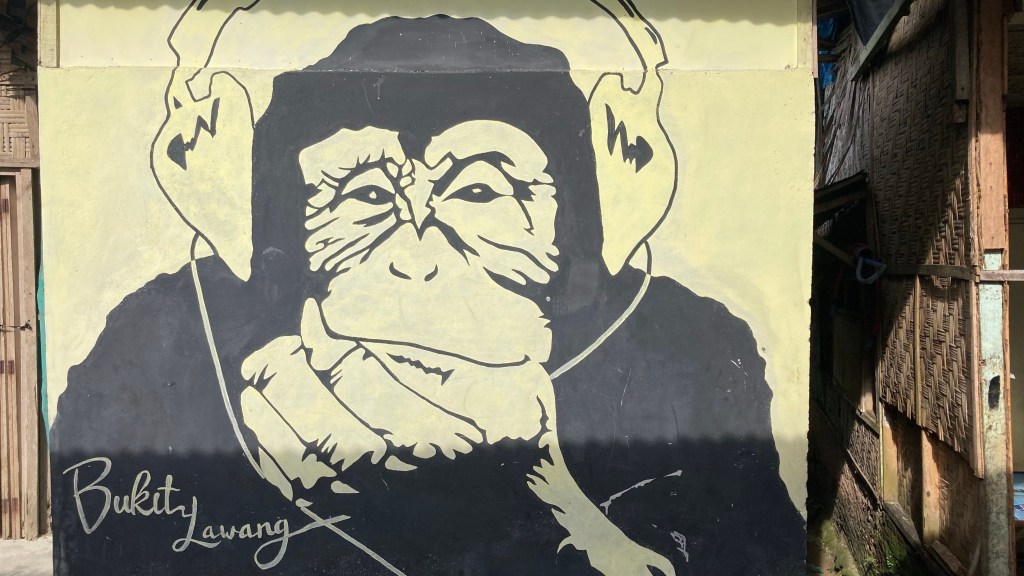
Bukit Lawang
We’d decided to limit our activities to 3 places rather than rushing around trying to fit too much in with the 2 weeks we had in Sumatra. We headed to Buckit Lawang for our second stop which was a 3 hour taxi ride west from the city. From here you can access the jungle and it’s a pretty village set along a river.


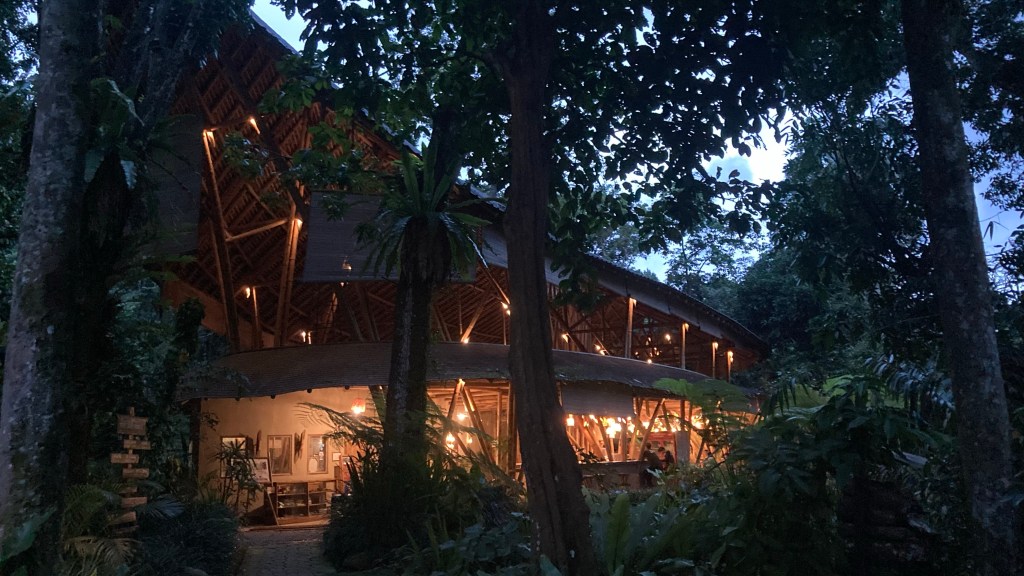
We booked into a really lovely eco lodge, we’ve been spending an average of about £10 a night on accommodation but splashed out and spent £26 a night as I was my birthday! ( 53, the last time I went travelling like this I would have been in my 20’s, also with Richard!)


We were going to try and do a bit of a trek from here, but I ended up with a bad cold, so the thought of walking through the rainforest in the heat and rain, lots of rain, didn’t appeal, so we just enjoyed the village and food!


Our final stop was Lake Toba, which was about 100 miles south of Bukit Lawang, and again a shared taxi was the only real option. So we set off on our 8 hour journey (an average of 12 miles an hour due to the road conditions).
This is where you can be misled by the internet. I’d looked up what the ‘tourist transport’ was like and generally the reviews were pretty negative, but the only other option was a private car which was about £50 more expensive. So we decided that we’d risk the cheaper option, and glad we did. The car was a modern SUV and there was only us 2 and one other person for most the journey, then 3 more picked up after we dropped her off, so it was perfect.
The journey was very scenic — through villages and farms then up over a mountain pass with a few odd manmade sights on the way.

We arrived in the town of Parapat, from here you could get ferries over Lake Toba to Samosir Island which is where we were headed.
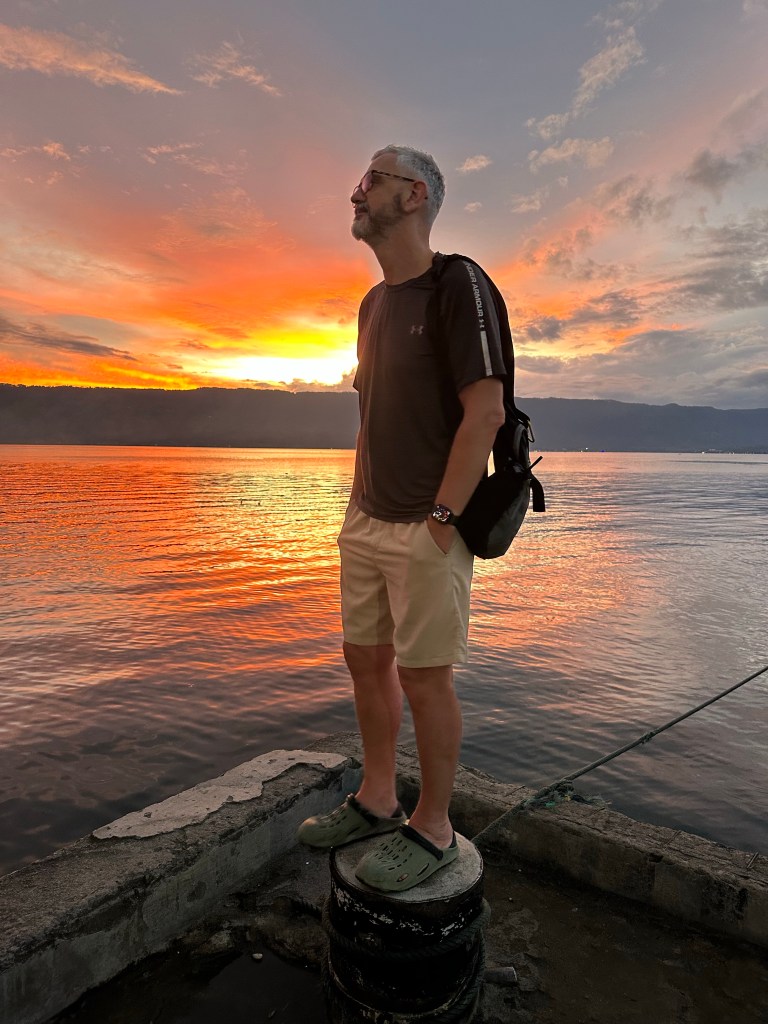
We decided to stop the night in Parapat and catch the ferry the next morning, and I’m glad we did, the sunset over Samosir was pretty special.


Samosir
Lake Toba, which is the largest lake in the SoutheastAsia, the second largest lake in the world after Lake Victoria in Africa, a lake that is included in the list of geo parks that have been established recognized by UNESCO, the largest volcanic lake in the world and the largest lake in Indonesia. Lake Toba is located in North Sumatra Province. In the middle of Lake Toba, there is Samosir Island which is often the centre of attention of tourists and is the fifth-largest island in the world in the middle of the lake after Manitoulin Island in America, the area of Samosir Island is almost the size of Singapore.
https://dolanesia.travel/articles/samosir-island
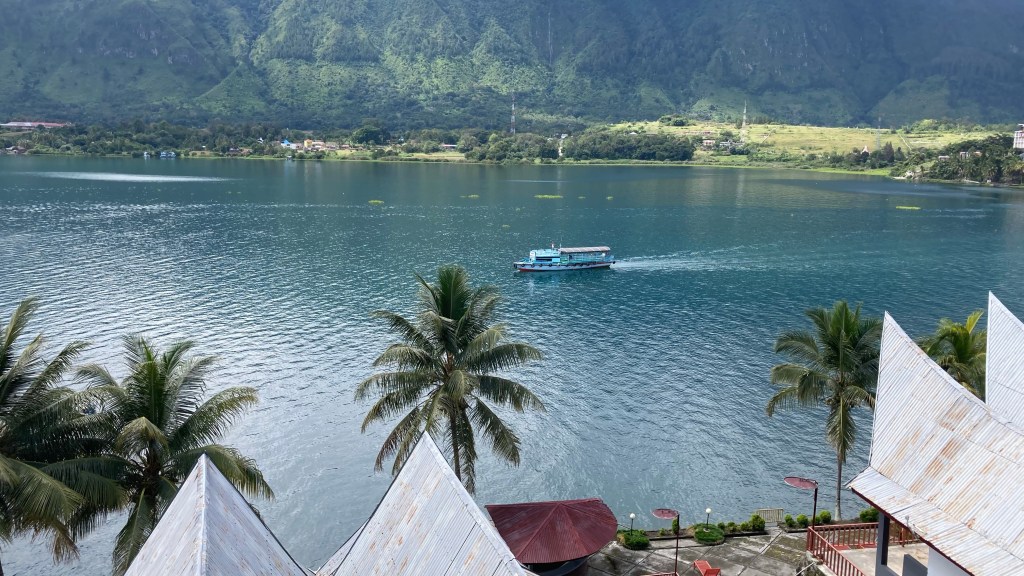
The ferry over to Samosir the next morning gave you a nice view of Parapat and right down the lake and the surrounding hillsides.


We docked right in the centre of a peninsula where all the accommodation was located and managed to get a little room right on the lake.


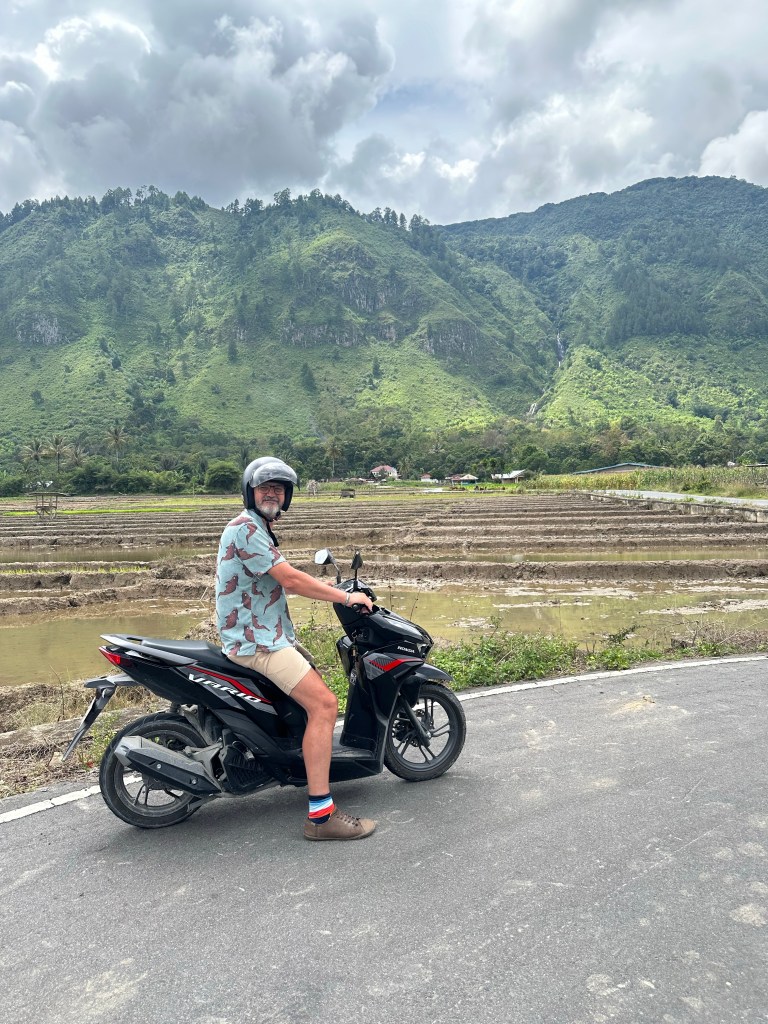
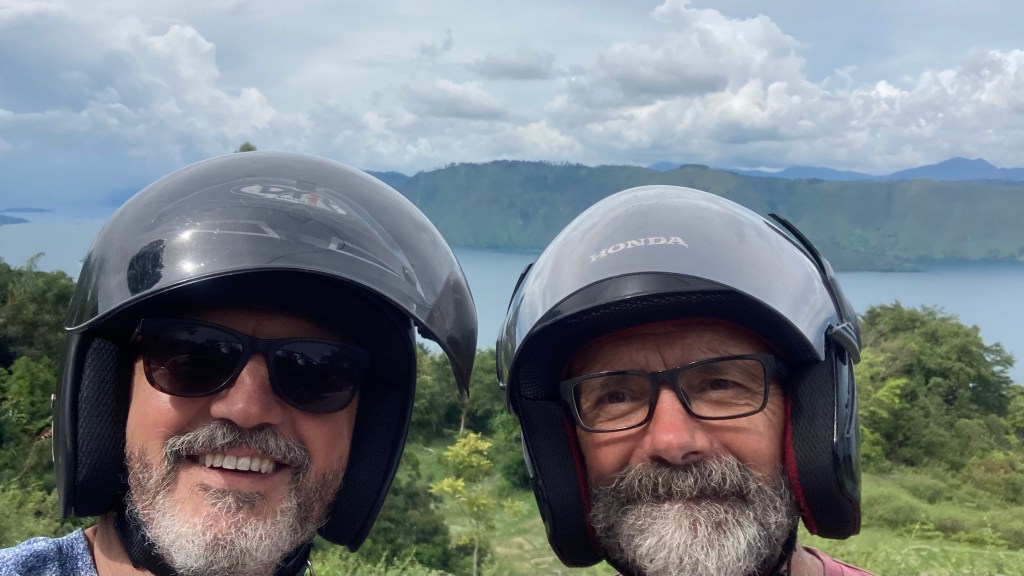
Since being in Asia I think I’ve become a little obsessed with road conditions, and the accident in Borneo didn’t help! Samosir roads looked pretty good so we braved a motor bike again so we can explore all the out of way areas on the island. (£5 a day, bargain)
We set off on the first trip with a determination not to go right around the island, but as usual we just went ‘a little further’, and ended up doing the approx 90 miles in a 6 hour journey.
Road condition highlights were water buffalo wandering in front of us and quite a few landslides where the road had just disappeared down the hill.


Although it was a long ride this island has to be one of the most beautiful places I think I’ve ever visited. The scenery changed from massive lake vistas, farms, villages, and hills covered in forests. Being on the motorbike you got all the smells as you passed by places, fish cooking, garlic, coconut husks being burnt, and a few that weren’t so great.




The Batak Toba people were the indigenous population on the island:
The Batak Toba people speak in the Toba Batak language and are centered on Lake Toba and Samosir Island within the lake. Batak Toba people frequently build in traditional Batak architecture styles which are common on Samosir
https://en.m.wikipedia.org/wiki/Toba_Batak_people#:~:text=The%20Batak%20Toba%20people%20speak,which%20are%20common%20on%20Samosir.
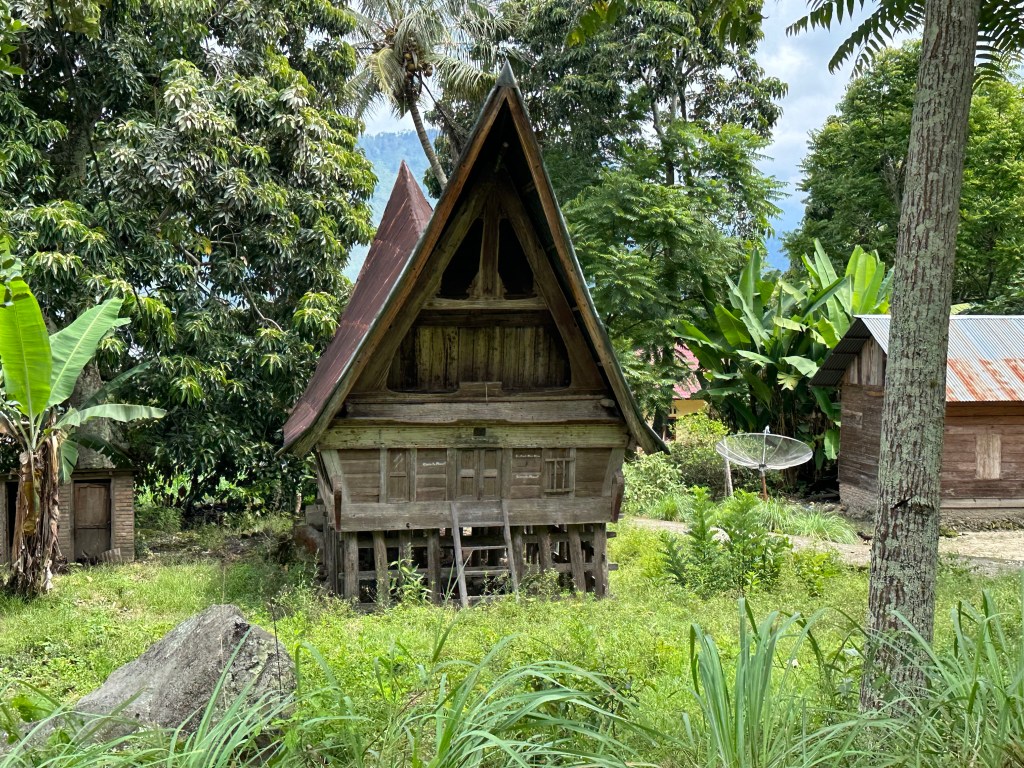
The most obvious sign of the islands cultural history are the traditional Batak houses. These traditional houses are dotted all over the island and the buildings have the same core design. However, as with all housing the level of decoration and finish varies — from very painted with patterns and carvings,
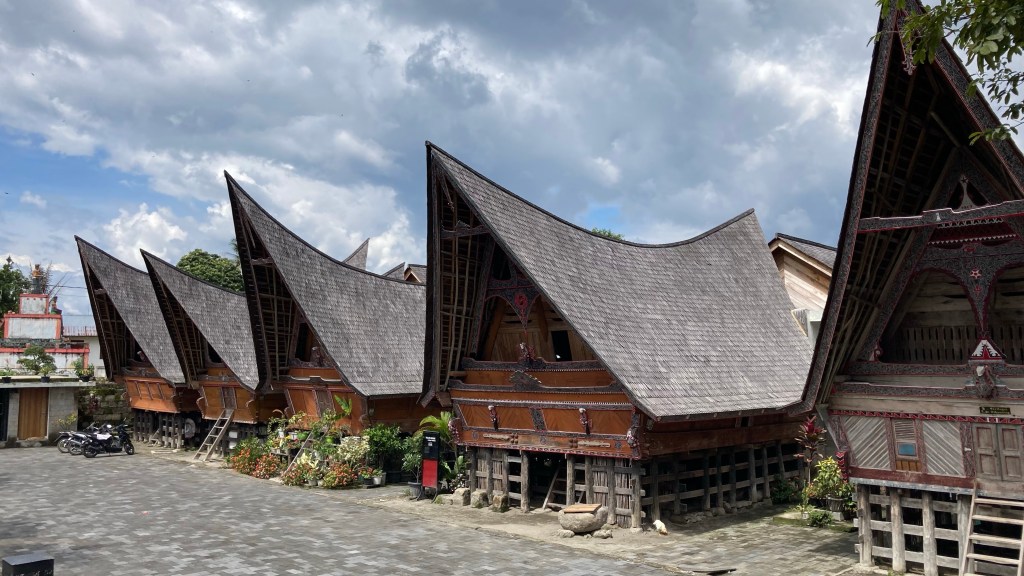
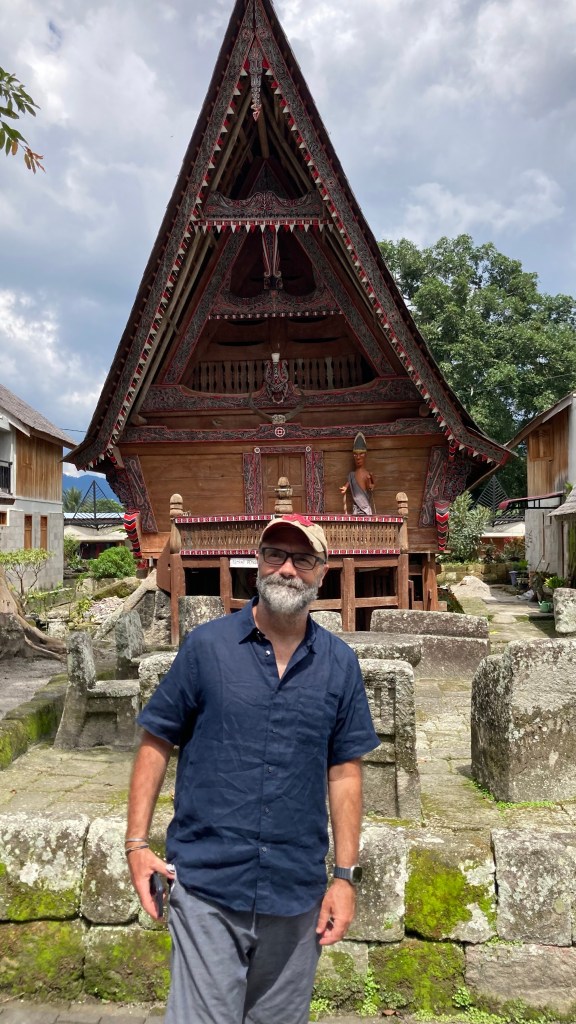


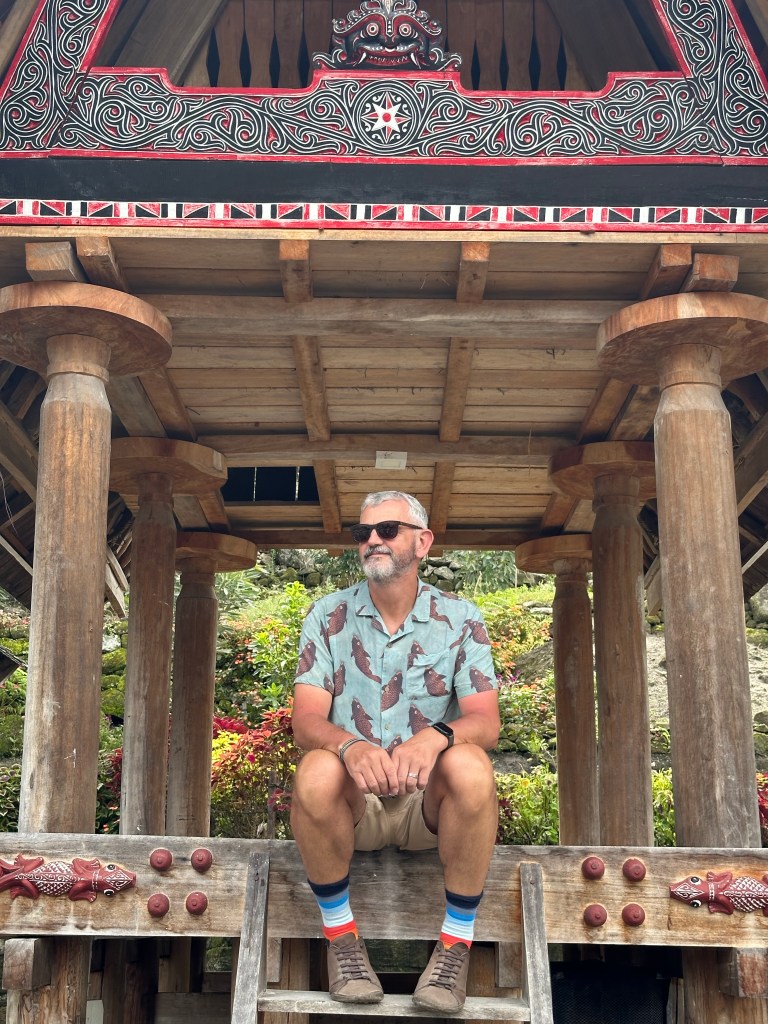
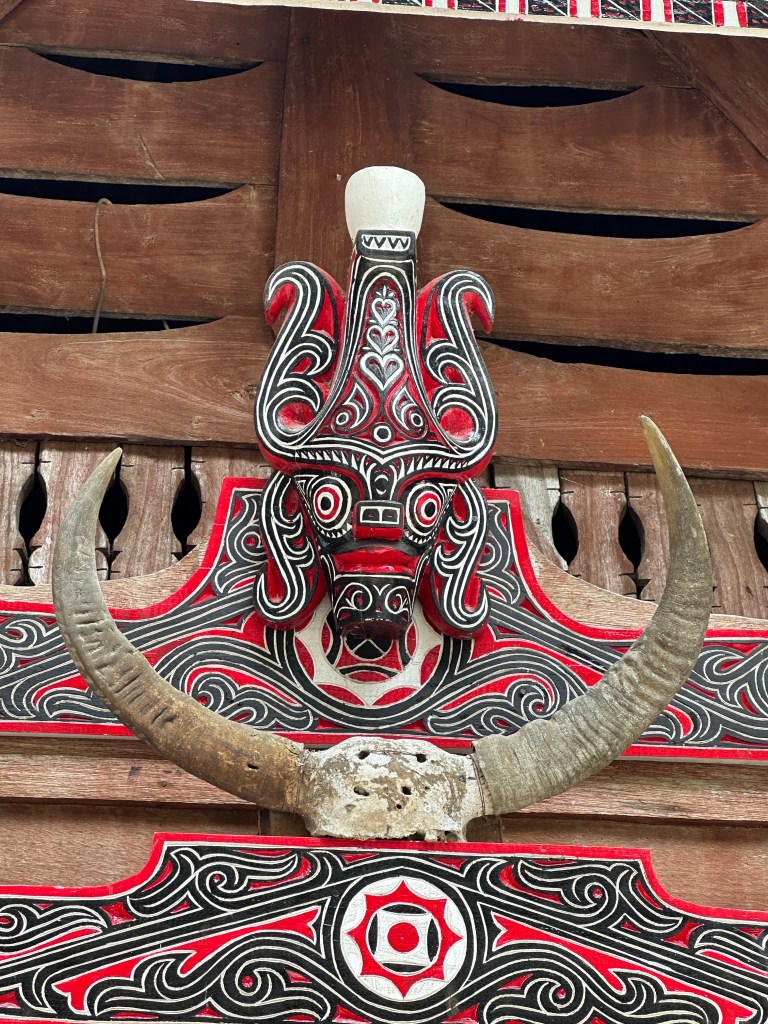


To very basic housing or functional storage buildings.

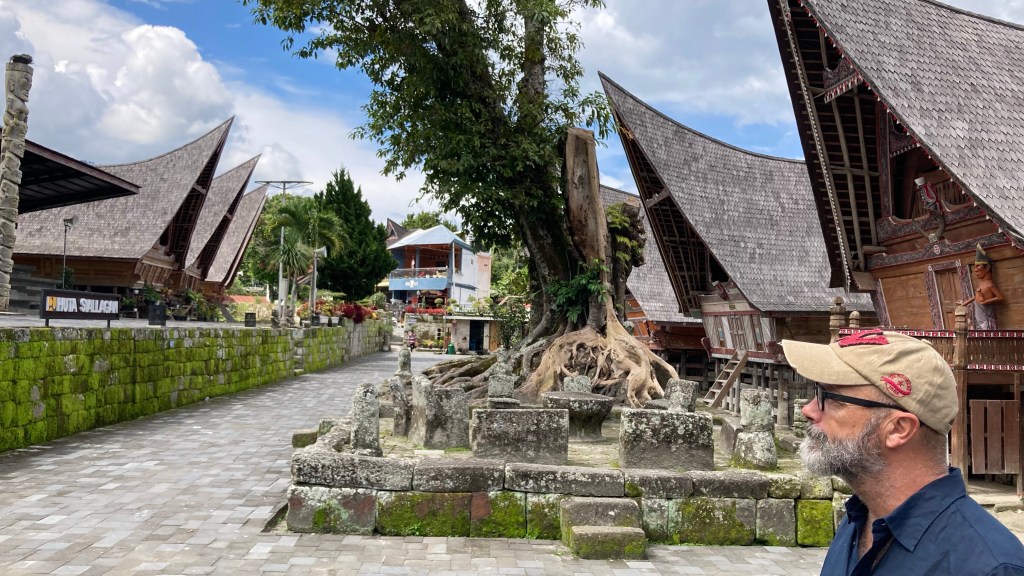
We visited Batu Kursi Raja Siallagan (Stone Chair of King Siallagan). This is a strange museum as people still live in the houses. The notable structures other than the houses are the 2 stone circles. The one on the left is where you were taken and it would be decided if you were guilty of your crime, and the second is where you would then go if you were guilty and your head would be bashed in and you’d be eaten!

On all of Samantha there are tombs where family ashes would be kept, these would generally be located in the middle of the field where food was being grown. on Samosir these again had that traditional structure on the top.


Well, our time in this part of Asia is nearing the end. We head to Singapore in a few days on our way to Australia for Xmas. We’ve been away for about 8 weeks now and haven’t even scratched the surface of what Indonesia has to offer. It’s an amazing place to visit, it should be on everyone’s bucket list, and I’m sure we will be back!
Route so far…
Matlock-Singapore-Bali-Gili Islands-Java-Borneo-Sumatra.


Wow!!! What an amazing trip you two are having!.
LikeLike